Textile and leather laser processing

Laser Applications for Textiles and Leather

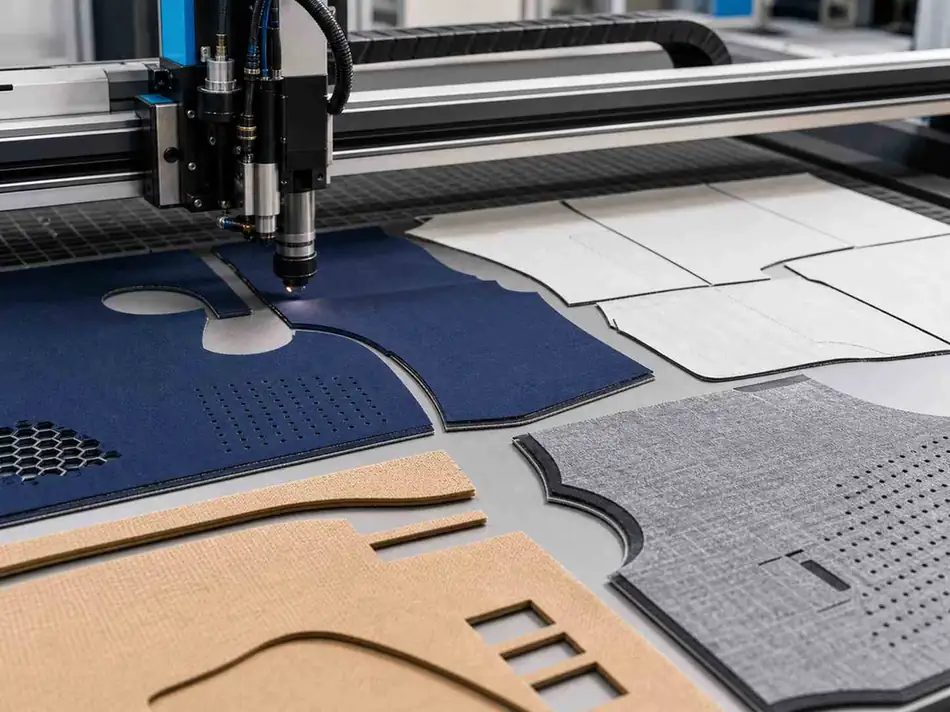
Laser cutting and engraving help fabric and leather manufacturers achieve precise contours, sealed synthetic edges, custom textures and flexible production without mechanical blade wear.

Non-contact processing for flexible materials

CO2 lasers are widely used for fabric cutting, leather cutting, perforation and surface effects, especially where pattern changeover and clean edges are important.

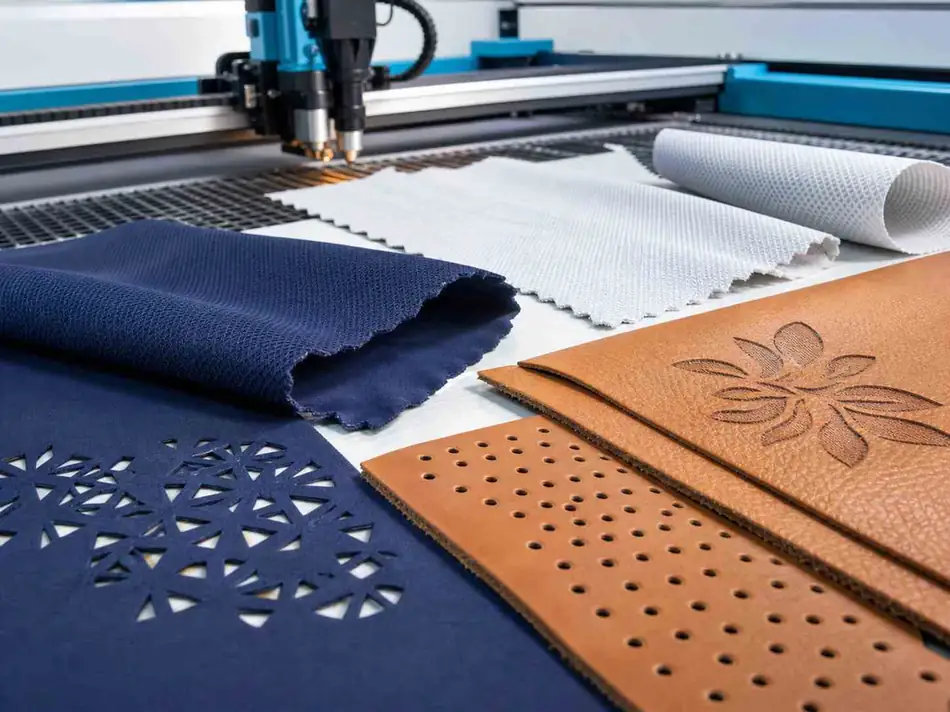
Fabric Cutting

Fabric Cutting

Cuts woven, knitted, technical and synthetic fabrics into accurate patterns.

  • Non-contact processing avoids fabric drag and distortion.
  • Useful for airbags, upholstery, apparel panels and filters.
  • Digital patterns can be changed quickly for small batches.
Cut-and-seal Edges

Cut-and-seal Edges

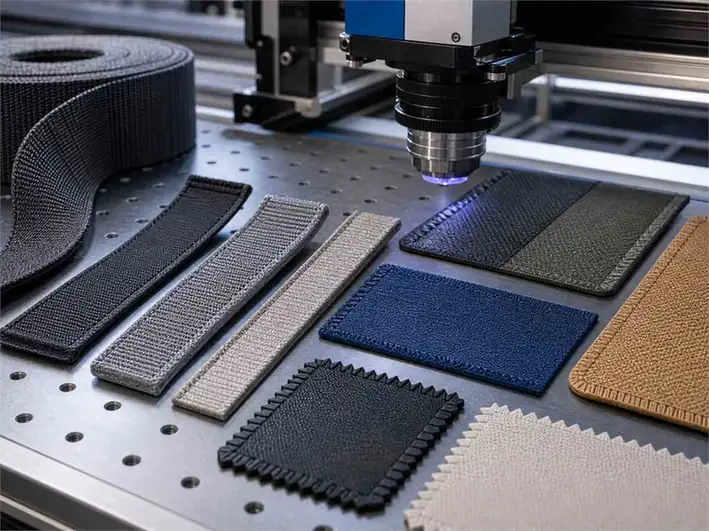
Laser heat can seal many synthetic textiles while cutting.

  • Reduces fraying on polyester and technical fabrics.
  • Improves consistency for repeated production.
  • Can reduce downstream edge finishing steps.
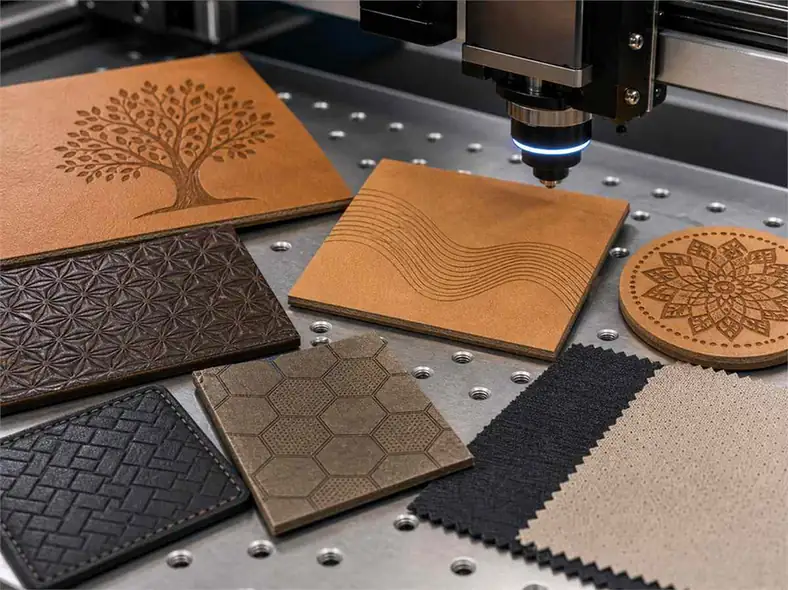
Surface Engraving

Surface Engraving

Creates decorative texture, logos and tactile patterns on leather and selected fabrics.

  • Supports personalization and brand marks.
  • Works for leather goods, footwear and upholstery.
  • Depth and contrast can be recipe-controlled.
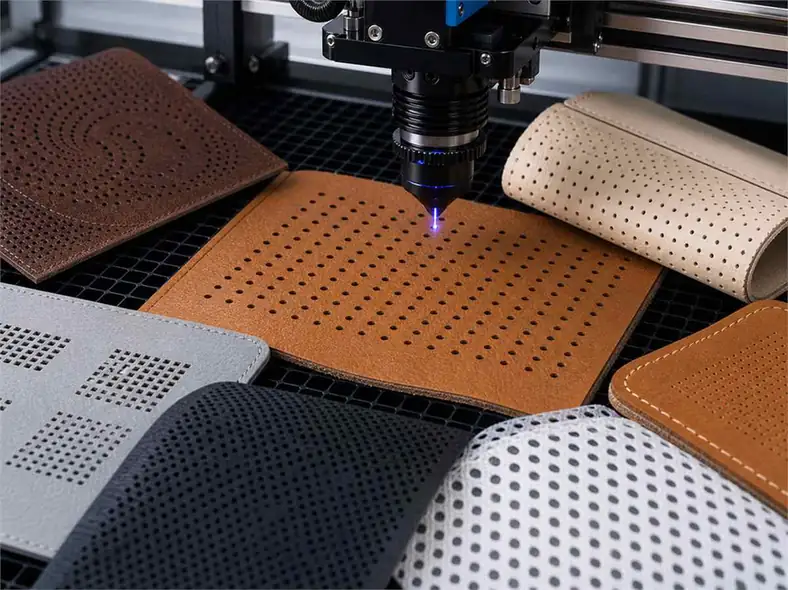
Perforation

Perforation

Forms dense hole patterns for breathability, design or functional filtering.

  • Useful for car seats, sportswear and shoe uppers.
  • High repeatability for hole spacing and pattern geometry.
  • No punch tooling is needed for pattern changes.
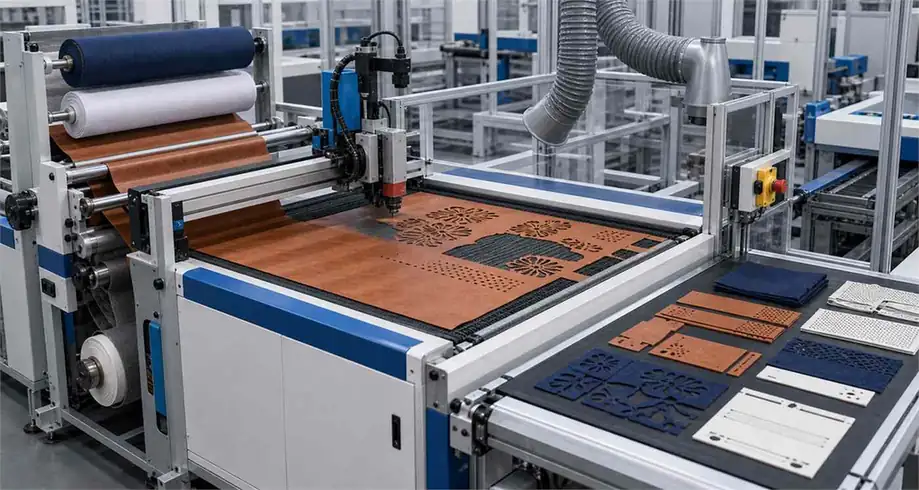
Textile laser production workflow

Combine material feeding, vision and exhaust for flexible fabric cells

Flexible materials need stable feeding and hold-down. Vision recognition, conveyor beds and extraction help keep cutting paths aligned and production clean.

  1. 1 Load roll or sheet material with tension control
  2. 2 Use vision registration for printed or woven patterns
  3. 3 Cut, engrave or perforate with exhaust enabled
  4. 4 Collect parts and verify edge quality

Where textile and leather lasers are used

The strongest use cases are flexible, shaped parts with frequent design changes.

Automotive

Airbags, interior trim, leather upholstery, mats and acoustic materials.

Apparel

Pattern cutting, decorative engraving and customized fabric details.

Footwear

Shoe uppers, perforation, leather branding and synthetic overlays.

Home Textiles

Curtains, carpets, decorative panels and upholstery fabrics.

Textile and leather production is shifting toward flexible digital cutting

Vision-guided cutting and batch-size-one personalization are becoming important for apparel, interiors and leather goods.

Small-batch Customization

Digital files replace hard tooling for rapid style and size changes.

Vision-guided Cutting

Cameras align cuts to printed patterns, woven textures or leather defects.

Lower Tooling Waste

No physical dies and optimized layouts can reduce waste in flexible material production.

Need textile or leather laser sample testing?

Provide material type, thickness, roll width and pattern requirement. We can recommend cutting, engraving or perforation settings.

Get Process Advice