Plastic parts laser processing

Laser Applications for Plastic Materials

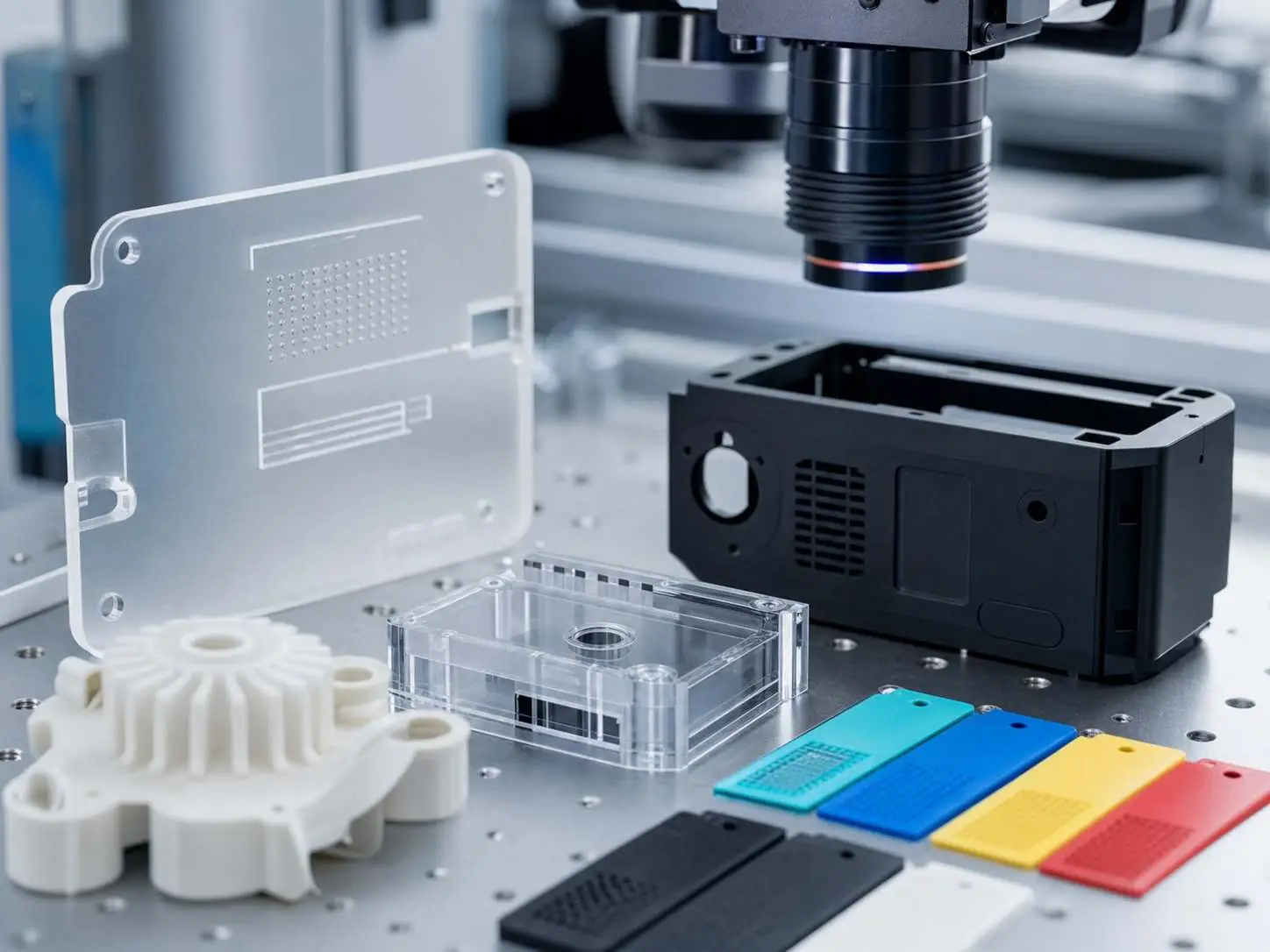
Plastics cover housings, labels, medical consumables and precision parts. CO2, fiber and UV lasers can be selected according to absorption, contrast, heat sensitivity and production rhythm.

From coding to joining, lasers support cleaner plastic processing

For ABS, PC, PMMA, PET, PEEK and other polymers, laser processing is often used for traceability, clean-edge cutting, selective welding and micro features without tool wear.

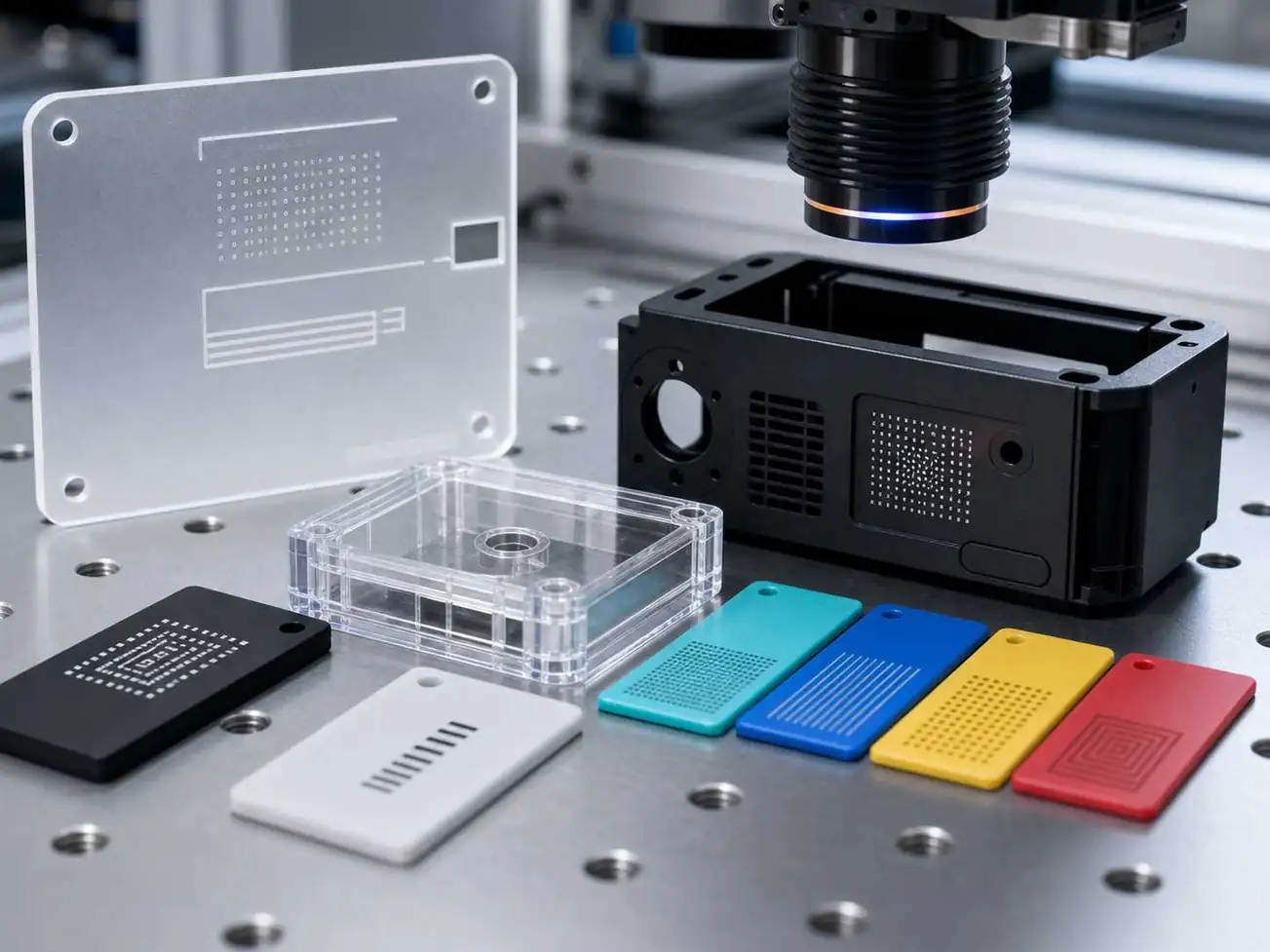
Plastic Marking

Plastic Marking

Creates logos, serial numbers, QR codes and traceability marks on housings, connectors and labels.

  • UV cold marking reduces thermal damage on sensitive polymers.
  • Fiber or CO2 lasers can create high-contrast marks on additives or coated plastics.
  • Suitable for inline coding and automatic barcode verification.
Cutting and Engraving

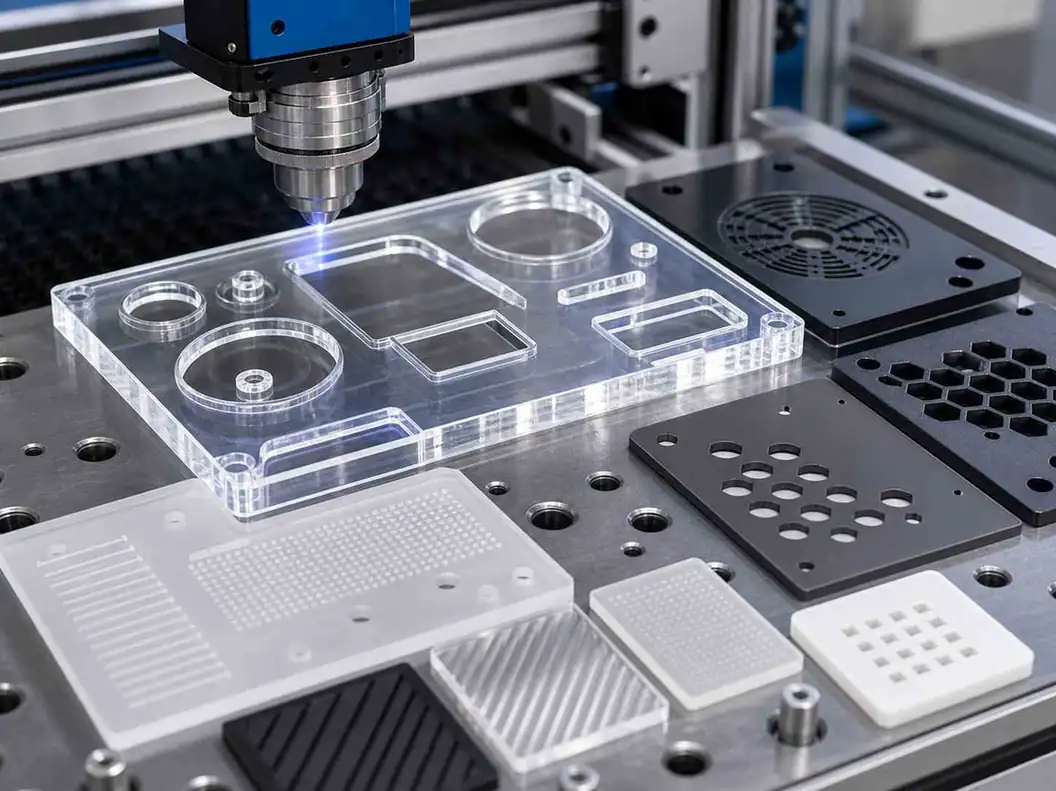
Cutting and Engraving

Processes acrylic, polycarbonate, PET sheets and plastic panels into precise shapes or engraved features.

  • Produces complex 2D contours without mechanical tooling.
  • Acrylic cutting can achieve polished, clean edges.
  • Supports prototypes, panels, guards, tags and display parts.
Plastic Welding

Plastic Welding

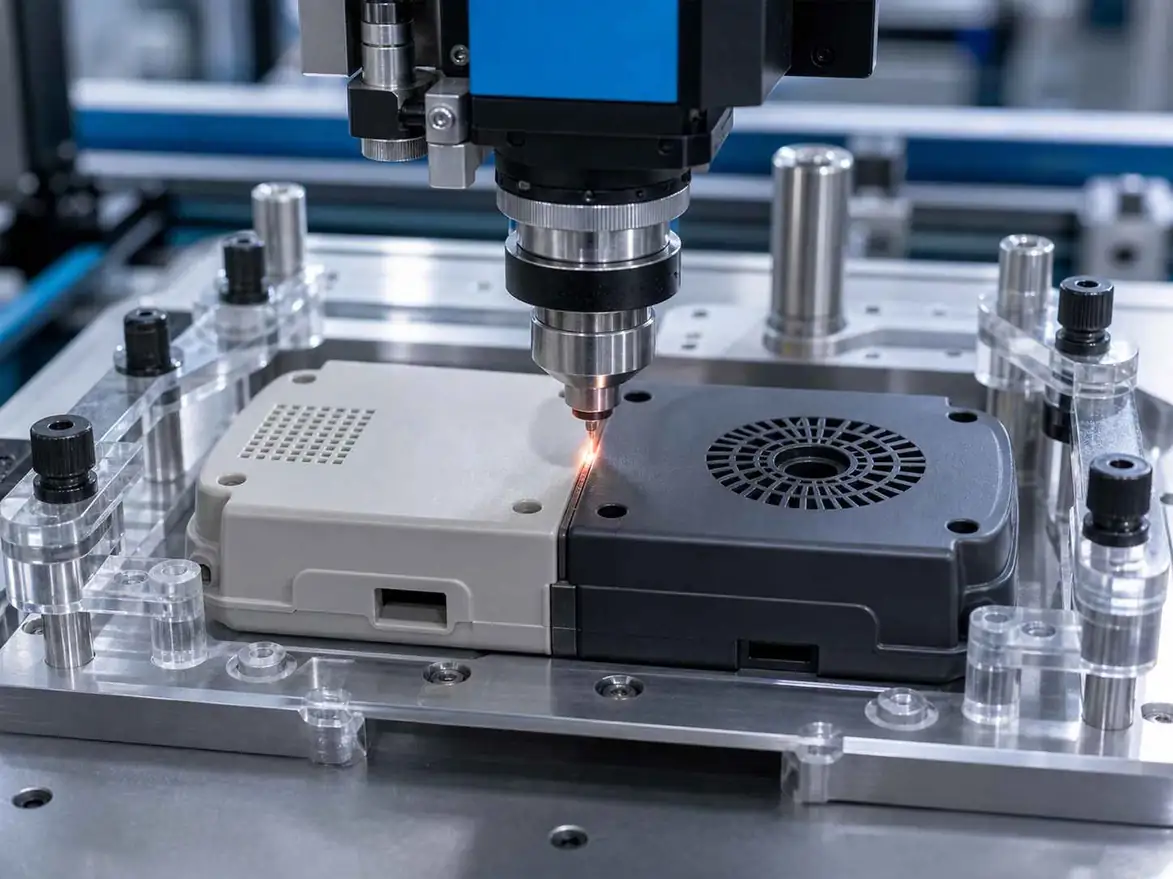
Uses controlled laser energy to join compatible polymers for sealed, repeatable assemblies.

  • Useful for sensors, fluidic parts and sealed electronic housings.
  • Non-contact joining limits particle generation and mechanical stress.
  • Can be integrated with pressure fixtures and vision alignment.
Micro Drilling and Texturing

Micro Drilling and Texturing

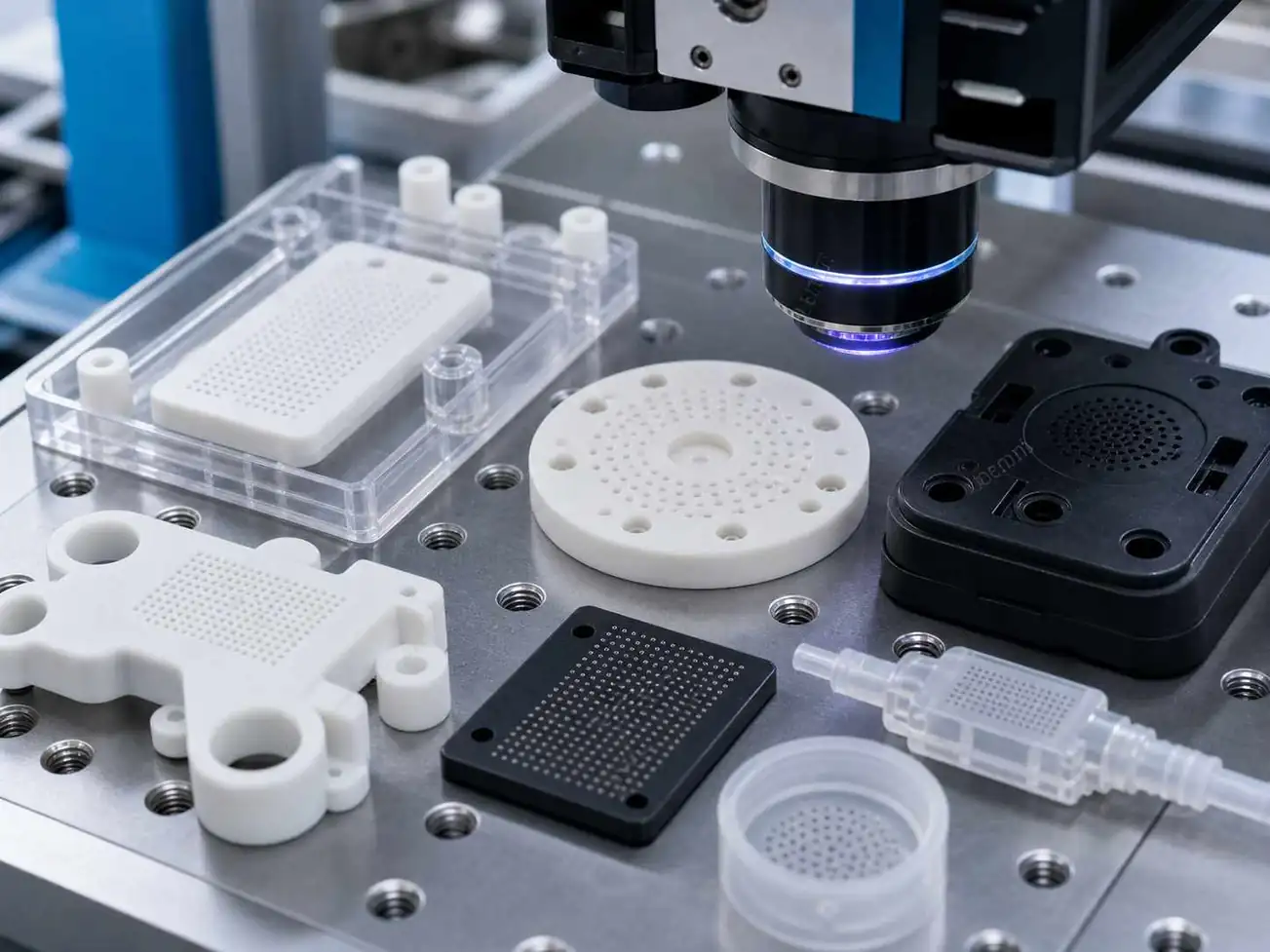
Forms fine holes, surface textures or controlled weak lines on thin plastic parts.

  • Supports vents, filters, microfluidic features and functional surfaces.
  • High repeatability for small-batch and high-mix production.
  • Digital recipes reduce fixture and tooling changes.
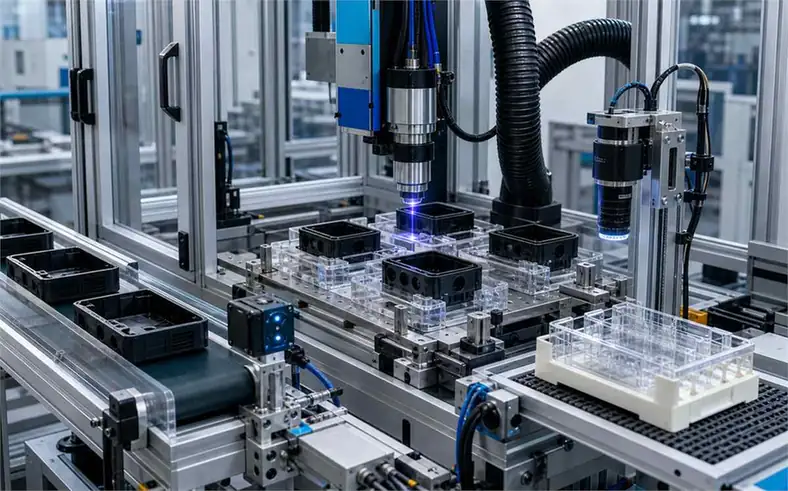
Plastic laser production workflow

Build a stable plastic laser process around material response

Plastic results depend strongly on wavelength, additives, color, thickness and thermal sensitivity. A reliable process usually combines sample testing, fume extraction, vision positioning and code verification.

  1. 1 Confirm polymer type and laser wavelength
  2. 2 Tune contrast, power, speed and focus
  3. 3 Add fixture, exhaust and safety enclosure
  4. 4 Verify mark readability or cut quality online

Where plastic laser processing is used

Plastic laser applications are common in traceable, lightweight and high-volume products.

Electronics

Housings, connectors, switches, chargers and control modules.

Medical

Consumables, diagnostic cartridges, polymer tubing and device parts.

Automotive

Interior parts, sensors, labels, connectors and lighting components.

Consumer Goods

Acrylic signage, appliance panels, packaging and branded accessories.

Plastic laser processing is moving toward lower heat and higher traceability

The strongest demand is coming from sensitive plastics, medical-grade parts and automated coding lines.

UV Cold Marking

Shorter wavelengths improve absorption and reduce heat impact for delicate polymers.

Readable Traceability

Inline verification is becoming standard for QR codes, UDI and batch data.

Flexible Automation

Vision-guided marking and recipe switching help high-mix plastic production.

Need to test plastic marking, cutting or welding?

Share the polymer type, color, thickness and target cycle time. We can help evaluate the laser source and integration method.

Get Process Advice