Glass and ceramic laser marking

Laser Applications for Glass and Ceramic Materials

Glass and ceramics are hard, brittle and often used in demanding environments. Laser marking and engraving provide permanent, contactless identification for labware, electronic ceramics and industrial parts.

Permanent marking for hard and brittle materials

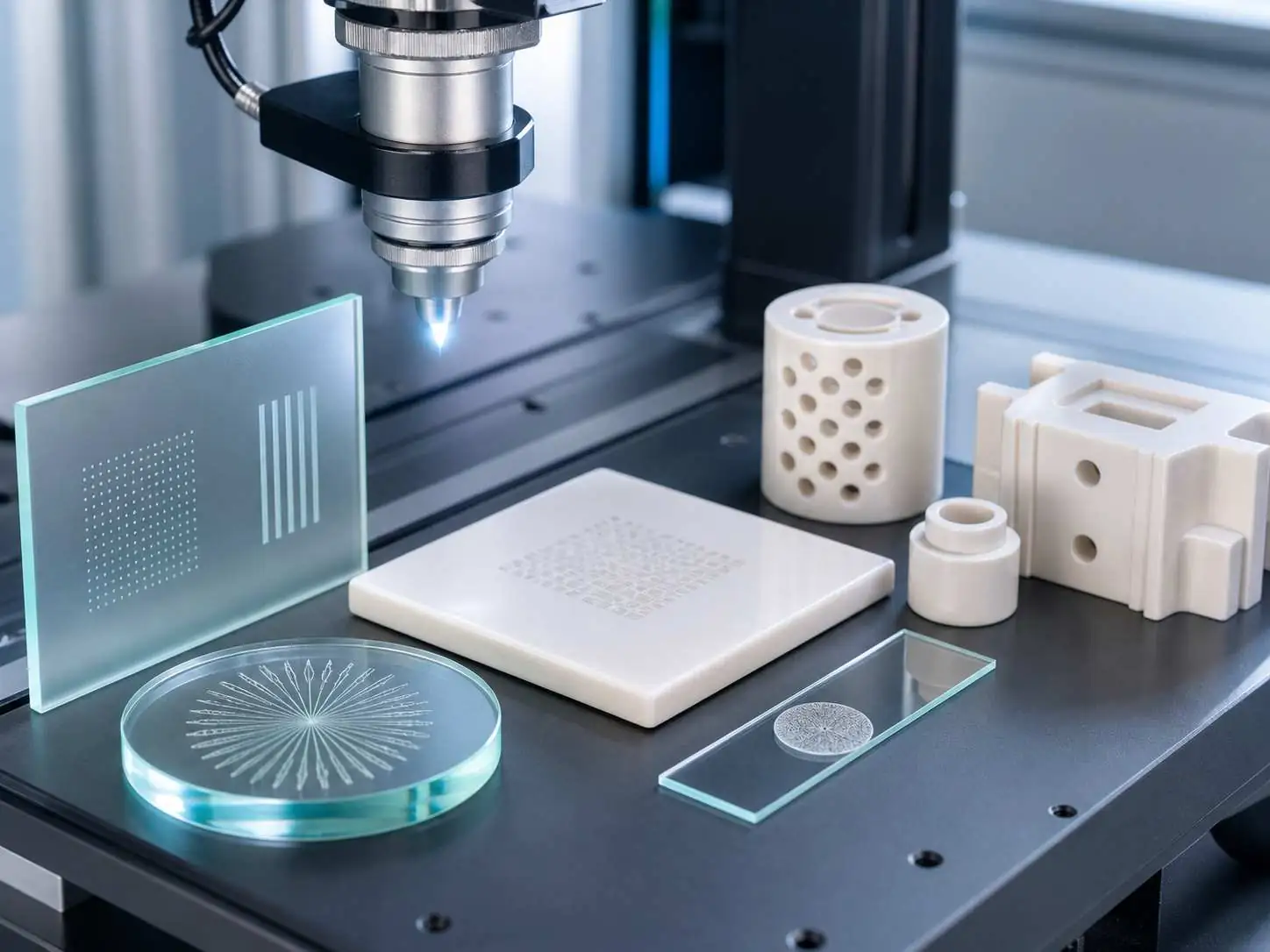
Laser processing can create frosted marks on glass, high-contrast ceramic labels, decorative patterns and precise micro features when the laser source and parameters are carefully matched.

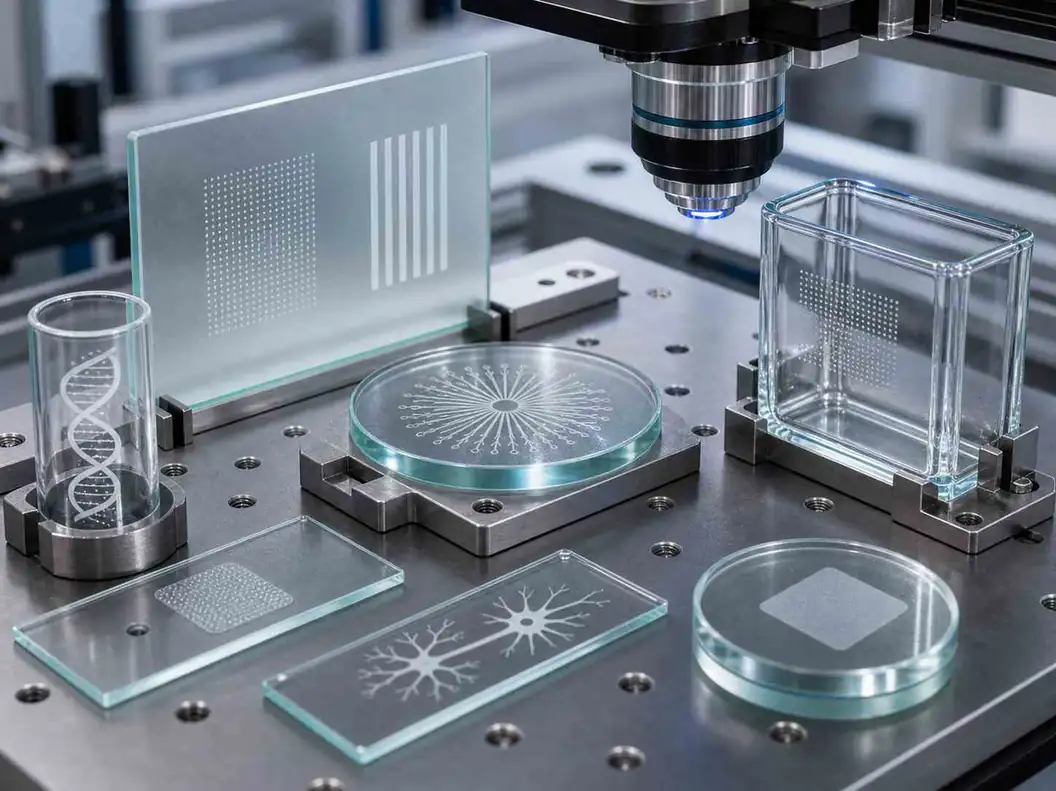
Glass Marking

Glass Marking

Creates durable frosted or matte marks on bottles, cuvettes, beakers and optical parts.

  • Useful for laboratory sample tracking and product branding.
  • Non-contact processing avoids fixture pressure on fragile parts.
  • Can mark curved or cylindrical products with rotary fixtures.
Ceramic Marking

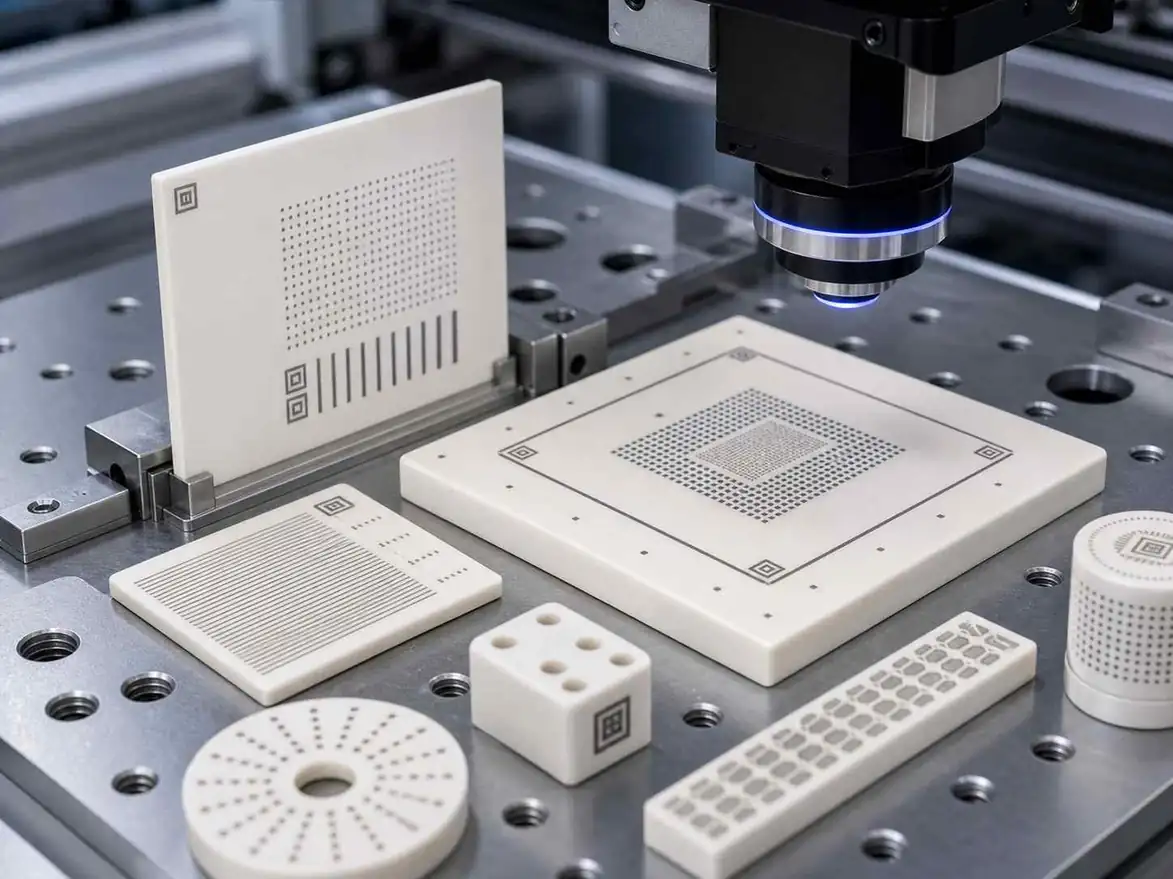
Ceramic Marking

Marks alumina, zirconia, glazed ceramics and ceramic electronic components.

  • Supports serial numbers, logos, barcodes and traceability codes.
  • Resists heat, chemicals and mechanical wear.
  • Useful on ceramic PCBs, packages, sensors and insulators.
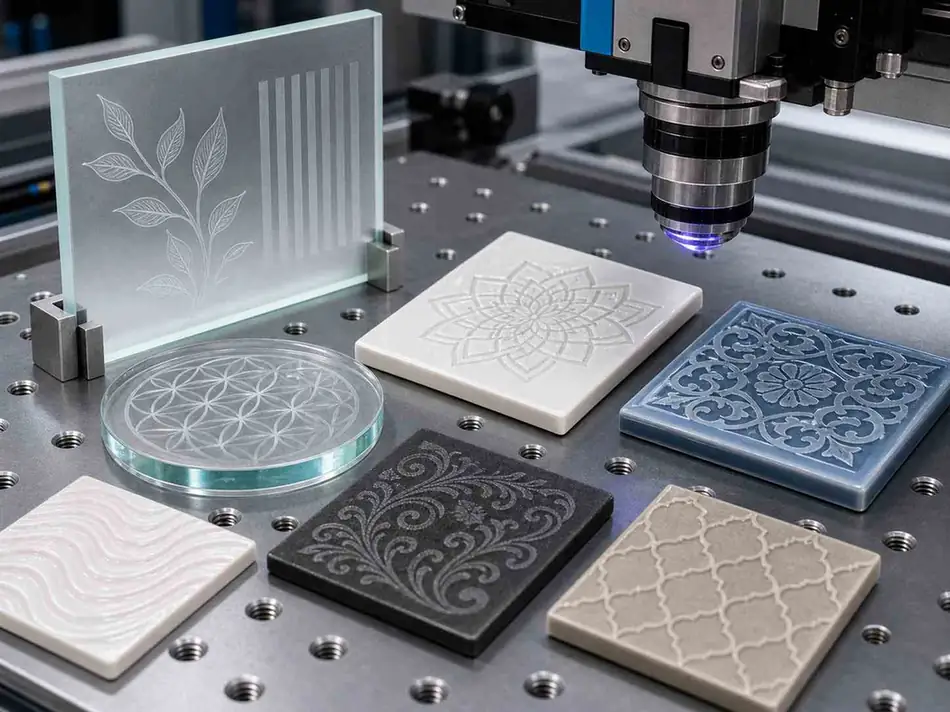
Decorative Engraving

Decorative Engraving

Adds fine patterns, logos and surface textures for consumer and architectural products.

  • No inks or consumables are needed for the mark.
  • Suitable for glassware, tiles and branded gifts.
  • Repeatable digital patterns support customization.
Precision Processing

Precision Processing

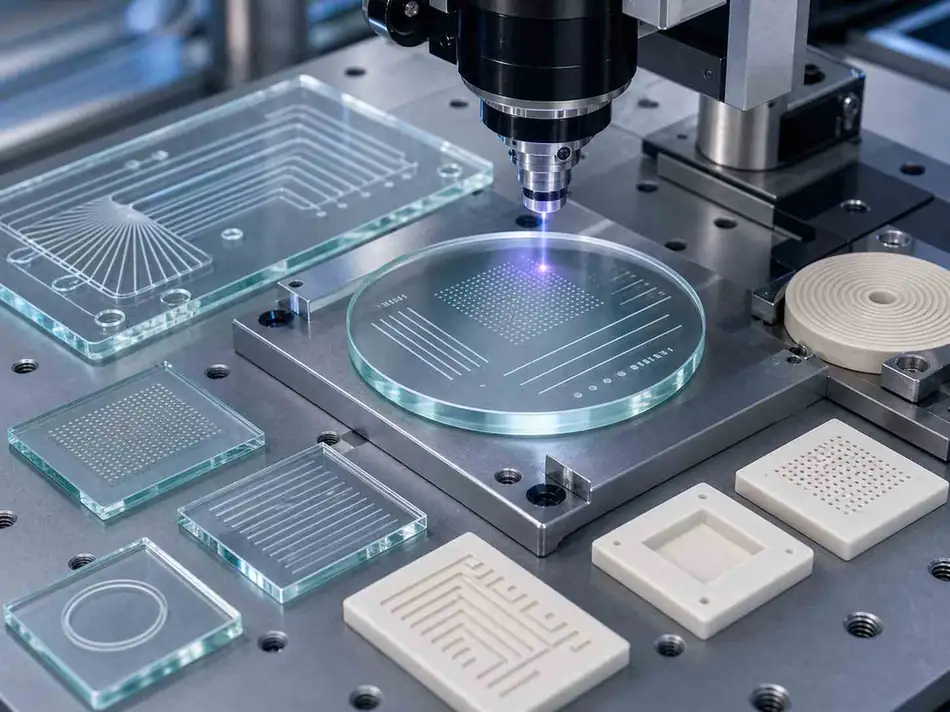
Uses controlled laser energy for fine engraving or micro features on technical ceramics.

  • Process development helps reduce chipping and cracks.
  • Ultrashort-pulse lasers can support demanding applications.
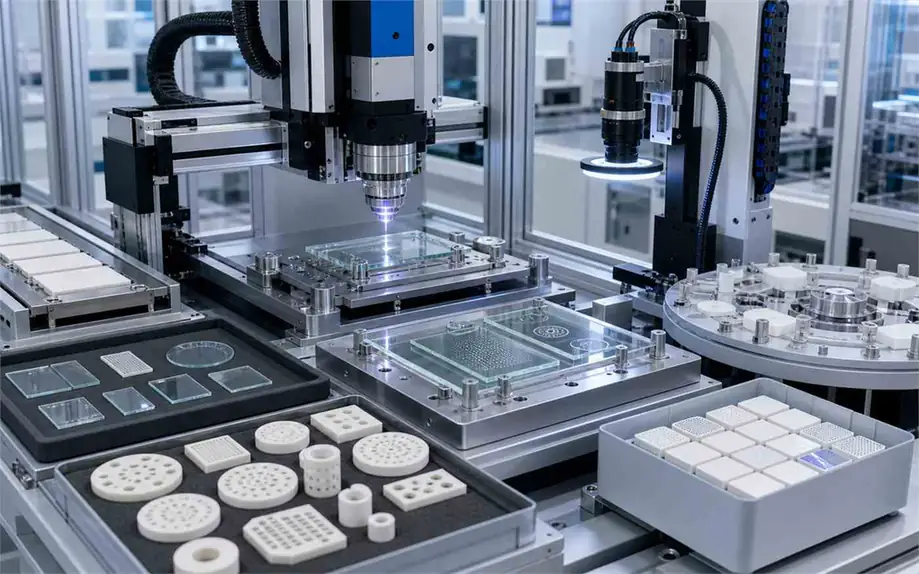
  • Works with automated loading and inspection for batch production.
Glass and ceramic laser workflow

Choose optics and pulse strategy carefully for brittle materials

Glass and ceramic laser processes depend on absorption, surface finish, thickness and acceptable micro-cracking. Sample testing and optical configuration are critical.

  1. 1 Classify glass or ceramic type and surface finish
  2. 2 Select CO2, UV, fiber or ultrashort-pulse laser
  3. 3 Tune contrast while controlling cracks and heat
  4. 4 Verify readability, strength and surface quality

Where glass and ceramic laser marking is used

These materials are common in high-temperature, chemical and precision environments.

Laboratory

Cuvettes, beakers, sample containers and borosilicate glassware.

Electronics

Ceramic substrates, packages, sensors and insulating components.

Medical and Dental

Ceramic implants, dental crowns, lab equipment and instrument parts.

Consumer Products

Glassware, tiles, decorative panels and branded ceramic products.

Glass and ceramic laser processing is becoming more precise and automated

Demand is growing for permanent codes on smaller and more fragile technical components.

Ultrashort-pulse Processing

USP lasers help reduce heat effects for demanding brittle-material applications.

Higher Contrast Marks

Special coatings and tuned laser parameters improve readability on difficult surfaces.

Automated Handling

Vision positioning and gentle fixtures help scale fragile component processing.

Need to mark glass or ceramic parts?

Tell us the material type, surface finish and durability requirement. We can help evaluate the laser source and marking process.

Get Process Advice