Composite material laser processing

Laser Applications for Composite Materials

Carbon fiber, glass fiber reinforced plastics and hybrid composites need precise, low-force processing. Lasers can support cutting, marking, trimming and surface preparation when heat control is properly engineered.

Precision processing for lightweight engineered materials

Composite parts are used for strength-to-weight performance. Laser processing is valuable where mechanical tools create wear, delamination risk or slow changeover.

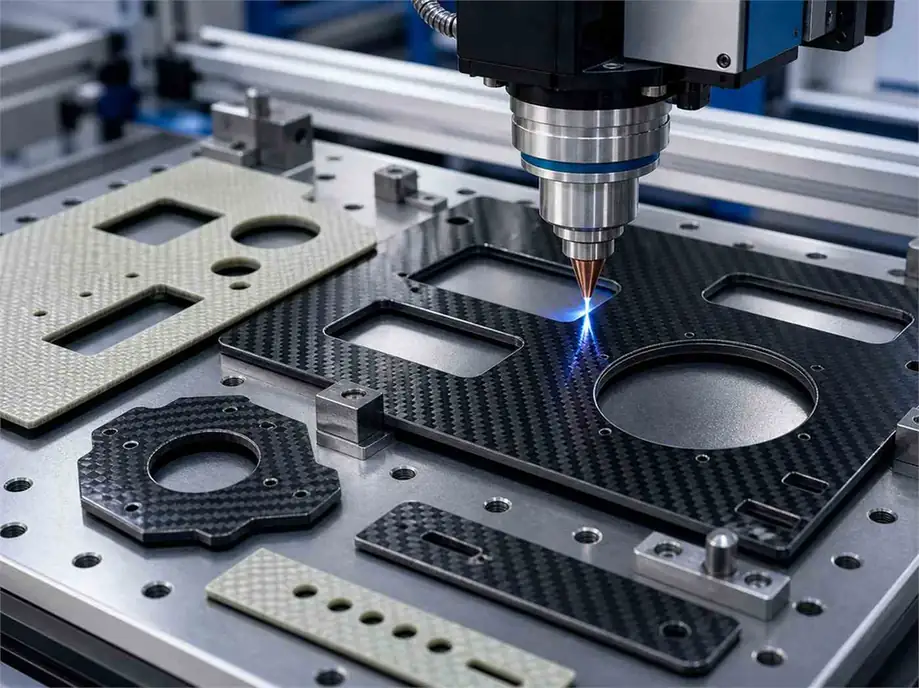
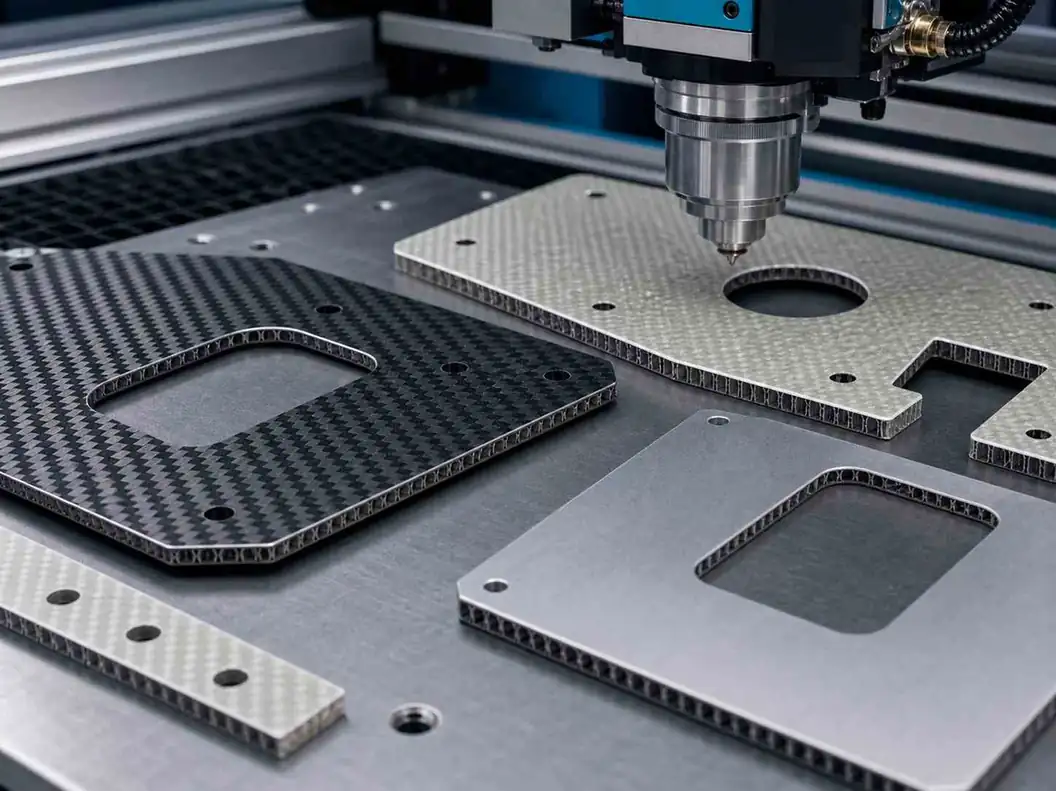
Composite Cutting

Composite Cutting

Cuts carbon fiber, fiberglass and resin-based laminates into accurate contours.

  • Non-contact cutting avoids tool wear on abrasive fibers.
  • Suitable for complex shapes and high-value lightweight parts.
  • Process tuning helps manage heat-affected zones.
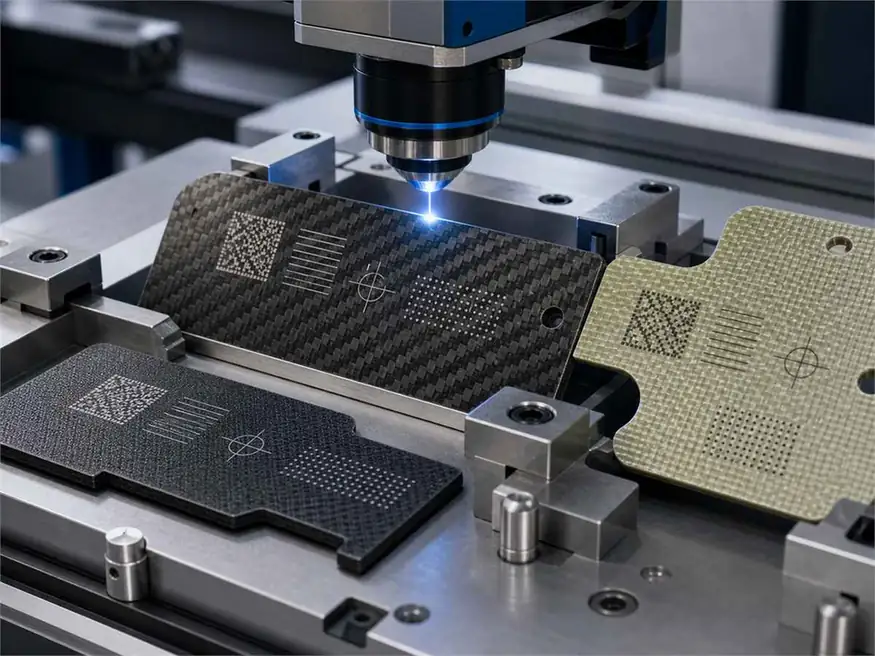
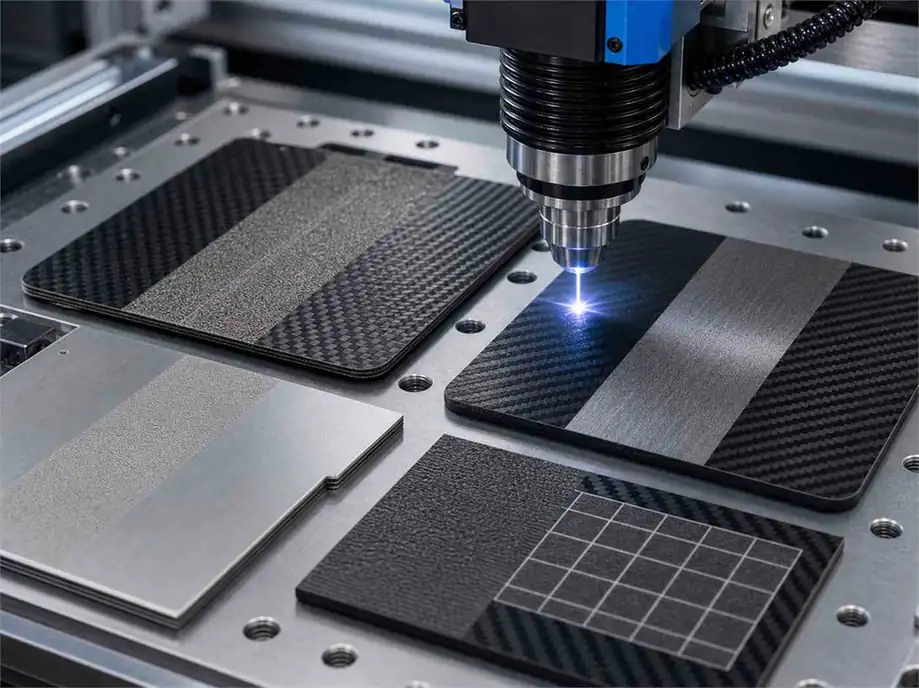
Traceability Marking

Traceability Marking

Adds part numbers, QR codes and production identifiers on composite surfaces.

  • Supports aerospace, automotive and defense traceability.
  • No labels are needed on weight-sensitive parts.
  • Vision verification can confirm code readability.
Trimming and Apertures

Trimming and Apertures

Creates slots, windows and edge trims on molded composite components.

  • Digital paths improve changeover for variants.
  • Useful for panels, covers, brackets and housings.
  • Can be integrated with robots for 3D parts.
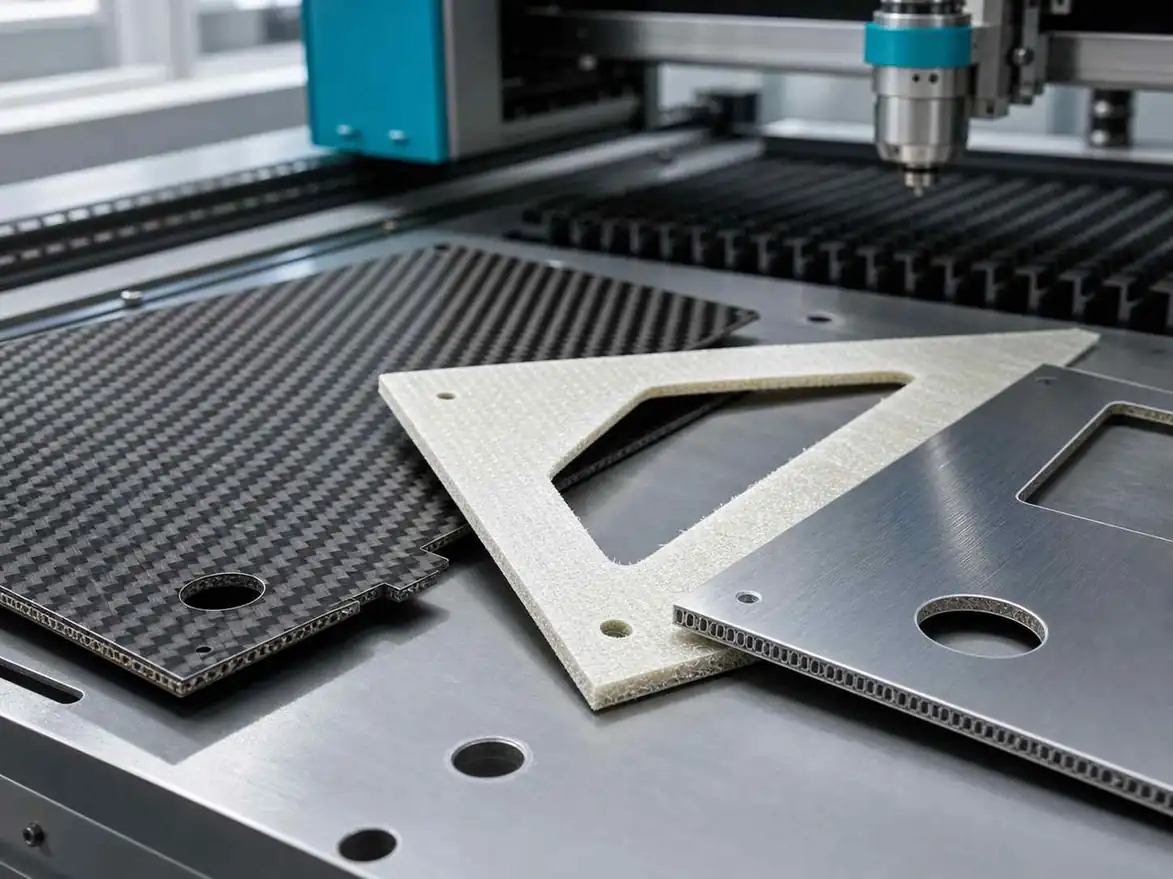
Surface Preparation

Surface Preparation

Textures or cleans selected composite surfaces before bonding, coating or assembly.

  • Supports repeatable adhesive bonding preparation.
  • Can reduce chemical or abrasive pre-treatment steps.
  • Inline monitoring helps control surface quality.
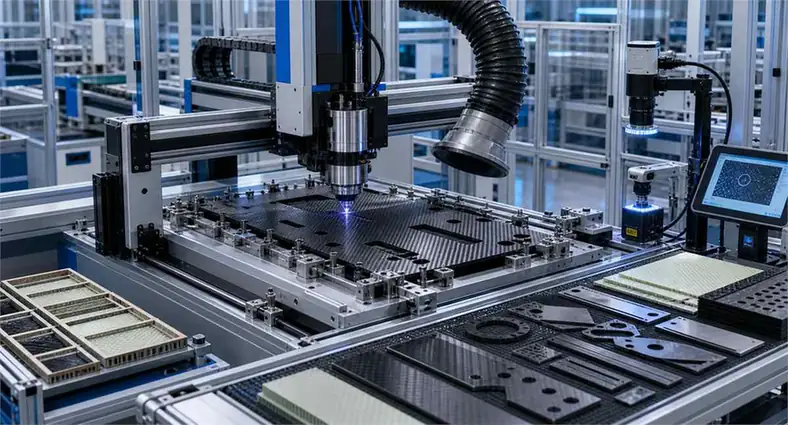
Composite material processing workflow

Composite laser processing needs thermal control and dust management

Different fibers and resin matrices react differently. Stable processing depends on parameter testing, extraction, fixture design and inspection.

  1. 1 Identify fiber, resin and laminate thickness
  2. 2 Select laser source and pulse strategy
  3. 3 Control fumes, dust and heat-affected area
  4. 4 Inspect edge quality, delamination and mark contrast

Where composite laser processing is used

Composite laser applications follow industries that demand lightweight, durable and traceable parts.

Aerospace

Composite panels, brackets, covers and traceable structural components.

Automotive

Lightweight interior and exterior composite parts.

Wind Energy

Composite blade components, panels and repair-related parts.

Defense and Sports

Protective structures, sporting goods and high-performance molded parts.

Composite production is asking for cleaner and more controllable processes

As composite use grows, laser processes must balance precision, heat control and production data capture.

Lightweight Production

Laser systems support part traceability without adding labels or fixtures.

Hybrid Material Stacks

More parts combine fibers, coatings and inserts, requiring tuned process windows.

Inline Quality Data

Vision and process monitoring help document edge and mark quality.

Need to evaluate composite laser processing?

Share fiber type, resin, thickness and quality limits. We can help assess cutting, marking or surface-prep feasibility.

Get Process Advice