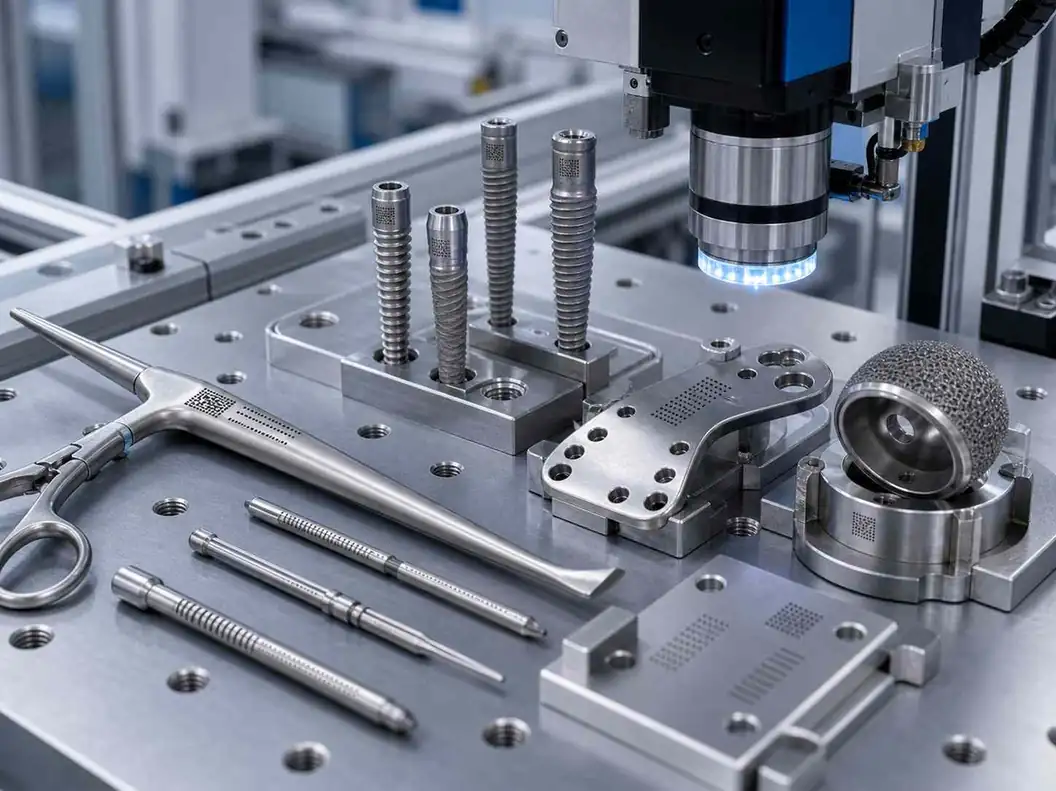
Biomedical laser processing

Laser Applications for Biomedical Materials

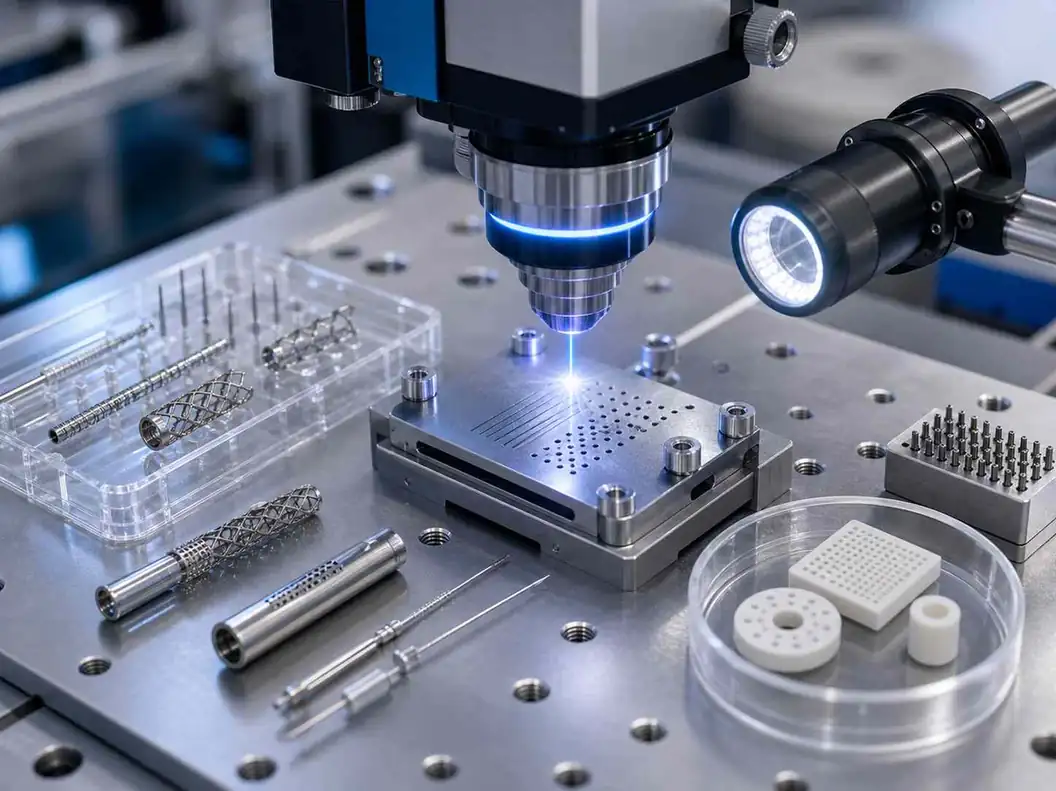
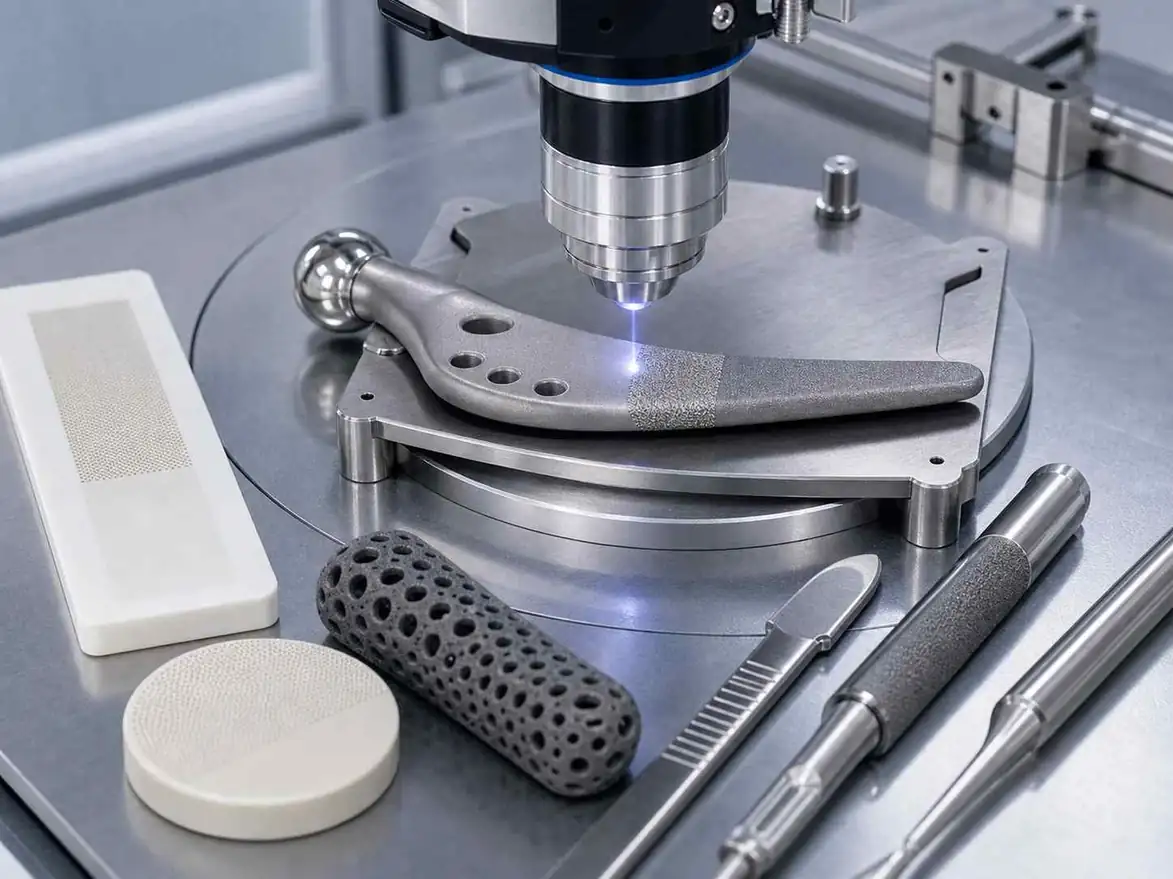
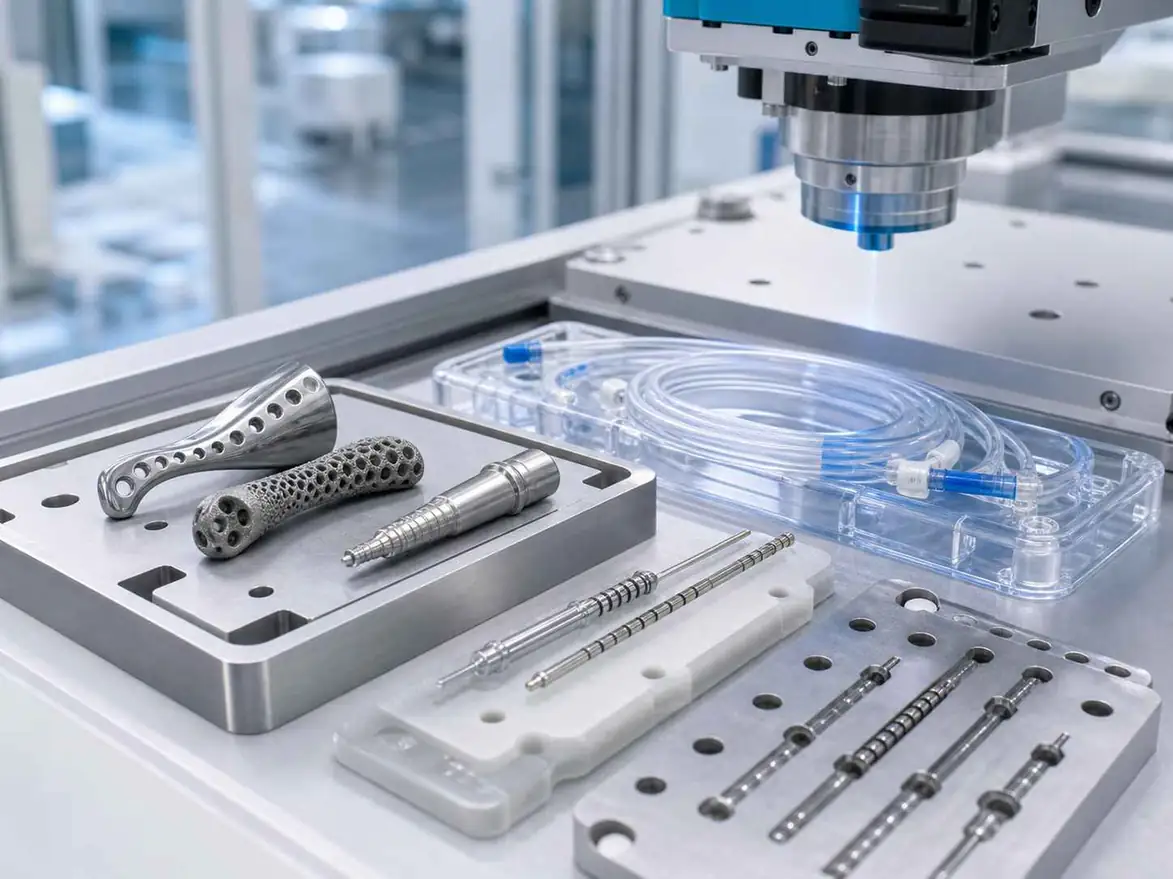
Medical-grade stainless steel, titanium, PEEK, polymers and tubing require clean, precise and traceable processing. Laser systems support UDI marking, micro-machining and component processing with minimal contact.

Clean and traceable laser processes for medical manufacturing

Biomedical laser applications emphasize permanent identification, limited thermal impact, clean surfaces and compliance-ready production data.

UDI and Device Marking

UDI and Device Marking

Applies permanent codes, scales, logos and serial numbers to medical instruments and device parts.

  • Marks can withstand sterilization, cleaning and handling.
  • Suitable for stainless steel, titanium and selected polymers.
  • Supports barcode verification and production records.
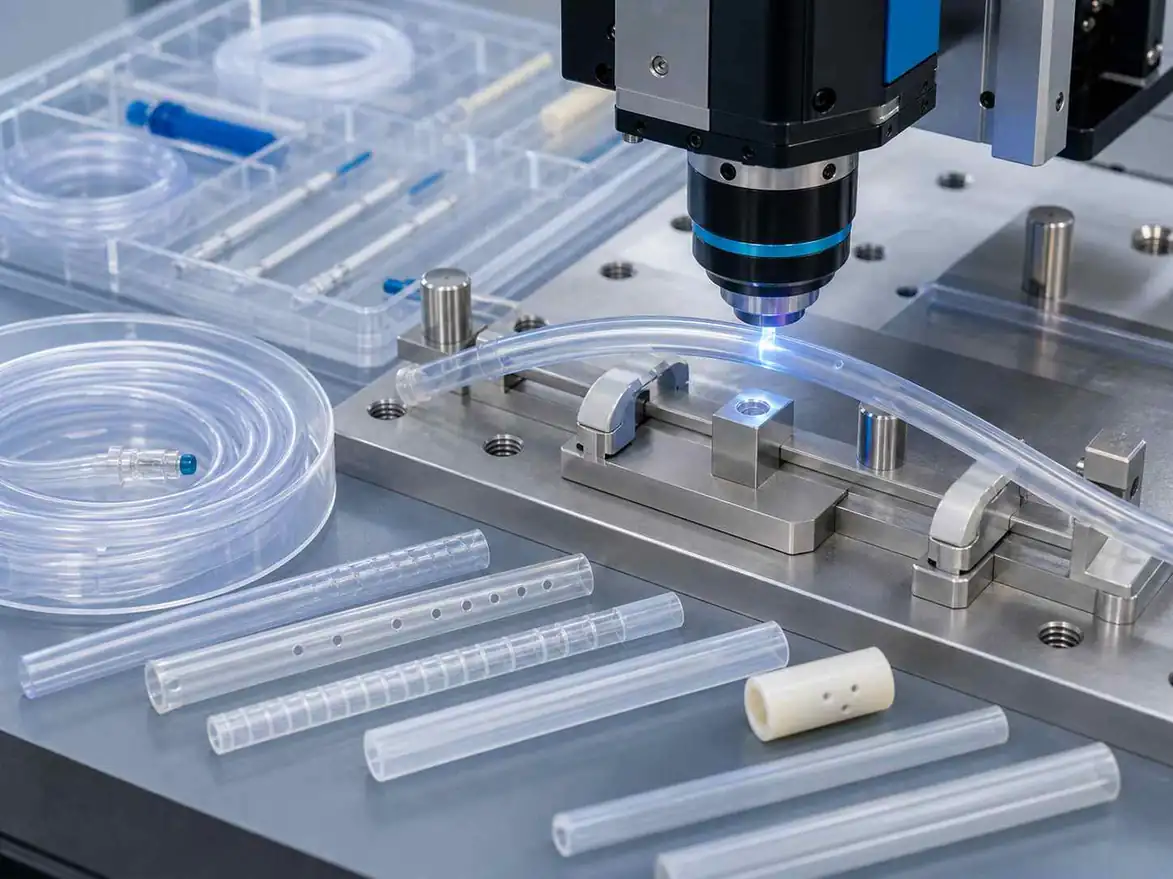
Tube and Polymer Processing

Tube and Polymer Processing

Cuts, marks or patterns medical tubing, polymer parts and diagnostic consumables.

  • Non-contact processing limits mechanical deformation.
  • Useful for catheters, tubing, syringes and cartridges.
  • Vision fixtures improve repeatability on small parts.
Micro Machining

Micro Machining

Creates micro holes, slots, windows and fine features on medical components.

  • Supports precision components where burrs must be controlled.
  • Works for prototypes and production tooling-free changes.
  • Process recipes help maintain dimensional consistency.
Surface Texturing and Cleaning

Surface Texturing and Cleaning

Modifies or cleans selected surfaces for bonding, readability or functional performance.

  • Can improve controlled surface roughness for selected parts.
  • Reduces reliance on chemical or abrasive methods.
  • Compatible with enclosed, validated production cells.
Biomedical laser process workflow

Biomedical laser cells require process validation and clean handling

Medical production often needs controlled fixturing, readable codes, material documentation and repeatable laser recipes that fit quality and regulatory workflows.

  1. 1 Confirm material, cleaning and sterilization requirements
  2. 2 Define mark, cut or texture acceptance criteria
  3. 3 Integrate fixture, enclosure and vision verification
  4. 4 Record process data for traceability

Where biomedical laser processing is used

Laser processes are common in device parts where cleanliness, permanence and precision are mandatory.

Surgical Instruments

Scalpels, clamps, retractors, drivers and reusable tool identification.

Implants and Orthopedics

Titanium and stainless components, trials, screws and orthopedic tools.

Catheters and Tubing

Polymer tubing, depth marks, holes and flexible device subassemblies.

Diagnostics

Cartridges, microfluidic parts, electronic modules and lab consumables.

Biomedical manufacturing is demanding cleaner and more verifiable laser processes

Traceability, low thermal impact and automated inspection are increasingly important in medical device production.

UDI and Compliance Data

Marking cells are being tied to production records and code verification systems.

Lower Heat Input

UV and ultrashort-pulse processes help protect sensitive polymers and small features.

Validated Automation

Robotic loading, fixtures and inspection reduce manual variation in medical production.

Need a biomedical laser process review?

Share material, geometry, mark content and validation needs. We can help assess laser source, fixture and verification strategy.

Get Process Advice